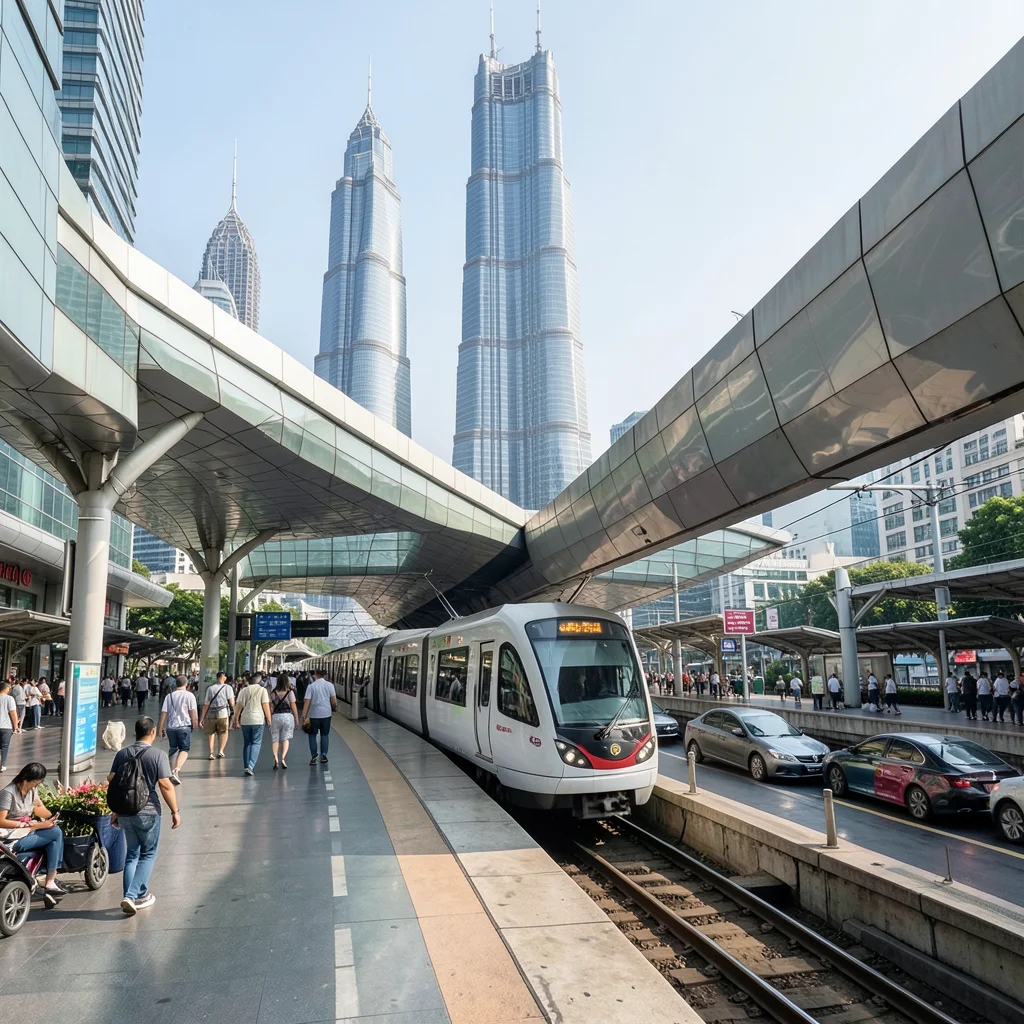
Your Essential Guide to Thailand’s BTS and MRT: Save Money and Travel Smart
Embarking on a journey through Thailand, especially its bustling capital Bangkok, often means navigating its efficient public transportation networks. The Skytrain (BTS) and the Mass Rapid Transit (MRT) are the lifeblood of urban travel, offering a swift, affordable, and convenient way to explore the city. Mastering these systems can significantly enhance your travel experience, saving you precious time and money. This guide will equip you with everything you need to know about Thailand’s BTS and MRT, ensuring you travel smart from the moment you arrive.
Understanding Thailand’s BTS and MRT is key to unlocking efficient travel in Bangkok. These interconnected systems serve as the primary arteries for commuting, allowing residents and tourists alike to bypass the notorious traffic jams. Whether you’re heading to a vibrant market, a serene temple, or a modern shopping mall, the BTS and MRT are your reliable companions. Let’s dive into how you can make the most of them.
Thailand’s BTS and MRT: Understanding the BTS and MRT Systems
The Bangkok Mass Transit System (BTS), commonly known as the Skytrain, and the Metropolitan Rapid Transit (MRT) are two distinct but largely complementary rail networks. The BTS operates on elevated tracks, making it a scenic way to travel above the city’s streets, while the MRT runs primarily underground, connecting different parts of the metropolitan area.
While operated by different authorities (Bangkok Transit System Public Company Limited for BTS and Bangkok Metro Public Company Limited for MRT), they are designed to integrate seamlessly. Many stations offer direct interchange or are located within a short walking distance of each other, allowing for easy transfers. Understanding their coverage areas is the first step to planning your routes effectively.
Tickets, Fares, and Smart Savings
Navigating the ticketing system might seem daunting at first, but it’s quite straightforward. Both BTS and MRT use a distance-based fare system, meaning the cost of your journey depends on how far you travel. You can purchase single-journey tickets from vending machines or ticket offices located at every station.
For frequent travelers, several options offer significant savings:
- Stored Value Cards (e.g., Rabbit Card for BTS, MRT Card for MRT): These rechargeable cards allow you to tap and go, skipping ticket lines. They often offer slight discounts on fares and can be used across various merchants, making them incredibly convenient.
- Day Passes: If you plan on making multiple journeys within a single day, a BTS Day Pass can be very economical. Check current prices and validity periods.
- Monthly Passes: For long-term visitors or residents, monthly passes provide the best value for unlimited travel within their respective systems.
The most common mistake is not considering these passes. Purchasing single tickets for every journey, especially with frequent travel, will invariably cost more. Always evaluate your itinerary before deciding on the best ticketing option.
Each BTS and MRT station is well-signed with clear directions in both Thai and English. Upon entering a station, you’ll need to pass through security checks before heading to the ticket gates. After tapping your card or inserting your ticket, you can proceed to the platform. Trains typically arrive every few minutes, especially during peak hours.
Pay close attention to the train’s destination displayed on the front and side of the train, as well as on the platform screens. The BTS has two main lines: the Sukhumvit Line (running east-west) and the Silom Line (running north-south). The MRT has the Blue Line and the Purple Line, with extensions planned and in development.
Interchanging between BTS and MRT is usually straightforward. Stations like Mo Chit (BTS) and Chatuchak Park (MRT), Asok (BTS) and Sukhumvit (MRT), Sala Daeng (BTS) and Si Lom (MRT) are key interchange points. Look for the signs indicating the direction to the other system.
Comparing BTS and MRT: Key Differences
While both systems are vital for Bangkok’s transport, they have distinct characteristics:
| Feature | BTS (Skytrain) | MRT (Mass Rapid Transit) |
|---|---|---|
| Elevation | Elevated | Primarily Underground |
| Coverage | Key commercial and tourist areas, along main roads | Connects major hubs, including areas not covered by BTS, and extends to outer suburbs |
| Ticketing | Single Journey Tickets, Rabbit Card, Day Passes | Single Journey Tickets, MRT Card, (some integrated services with Rabbit Card possible) |
| Interchange | Connects with MRT at several stations | Connects with BTS at several stations |
| Stations | Open-air platforms, generally more accessible via escalators and elevators | Underground stations, climate-controlled, access via escalators and elevators |
| Operating Hours | Typically 6:00 AM to midnight (subject to change) | Typically 6:00 AM to midnight (subject to change) |
Choosing between them often depends on your destination. If you’re heading to areas like Siam, Asok, or Phrom Phong, the BTS is usually more direct. For destinations like the Chatuchak Weekend Market (near Mo Chit BTS/Chatuchak Park MRT) or areas served by the MRT Blue Line, the MRT might be your best bet. Understanding their routes on a map is crucial.
Tips for Traveling Smart
To maximize your efficiency and comfort when using Thailand’s BTS and MRT, consider these practical tips:
- Peak Hours: Avoid traveling during morning (7-9 AM) and evening (5-7 PM) rush hours if possible. Trains and stations can get extremely crowded.
- Station Etiquette: Stand on the left side of escalators to allow faster walkers to pass. Queue patiently for trains and let passengers alight before boarding.
- Airport Rail Link: While not part of the BTS or MRT, the Airport Rail Link connects to the MRT at Makkasan Station and the BTS at Phaya Thai Station, providing access to Suvarnabhumi Airport.
- Connectivity: Many stations are located near popular attractions, shopping malls, and business districts. Use station maps or apps like Google Maps to identify nearby points of interest.
- Safety: Keep your belongings secure, especially in crowded trains. Report any suspicious activity to station staff.
- Hydration and Comfort: Carry a water bottle, especially during the hot season. While trains are air-conditioned, waiting on platforms can be warm.
Common Mistakes to Avoid
To ensure a smooth journey, be aware of these common pitfalls:
- Not checking operating hours: Both systems have set operating hours. Missing the last train can leave you stranded.
- Confusing lines/directions: Double-check the train destination and line color to avoid ending up on the wrong route.
- Ignoring interchange stations: Not planning your route to utilize efficient interchange points can lead to longer, more complex journeys.
- Overlooking stored value cards: Buying single tickets repeatedly is less convenient and often more expensive for multi-trip days.
- Bringing prohibited items: Large luggage, flammable items, and certain food/drinks are not allowed on board.
Conclusion
The BTS and MRT are indispensable tools for anyone wanting to explore Bangkok efficiently and affordably. By understanding their networks, ticketing options, and operational nuances, you can transform your travel experience from potentially stressful to remarkably smooth. Embrace these modern marvels of Thai infrastructure, and enjoy navigating the vibrant city with ease and confidence.
Frequently Asked Questions (FAQ)
Q1: Can I use the same ticket for BTS and MRT?
A1: Generally, no. The BTS and MRT are operated by different companies and use different ticketing systems. While stored value cards like the Rabbit Card can be used on the BTS and some other services, you typically need separate tickets or cards for each system unless an integrated pass is specifically offered.
Q2: How do I find the cheapest way to travel?
A2: For a single journey, the fare is distance-based. For multiple journeys in a day, a BTS Day Pass can be cost-effective. For extensive travel over longer periods, consider rechargeable stored value cards like the Rabbit Card, which can offer slight discounts and convenience.
Q3: Are BTS and MRT stations safe?
A3: Yes, both BTS and MRT stations are generally very safe, with security checks at entry points and CCTV surveillance. However, like any public transport, it’s always wise to be aware of your surroundings and keep personal belongings secure.
Q4: What are the operating hours for BTS and MRT?
A4: Typically, both systems operate daily from around 6:00 AM until midnight. However, exact timings can vary slightly, so it’s advisable to check the official schedules for the specific date and line you plan to use.
Q5: How can I get to Suvarnabhumi Airport (BKK) using public transport?
A5: You can take the Airport Rail Link, which connects to the MRT Blue Line at Makkasan Station and the BTS at Phaya Thai Station. This is a convenient and cost-effective way to reach the airport.