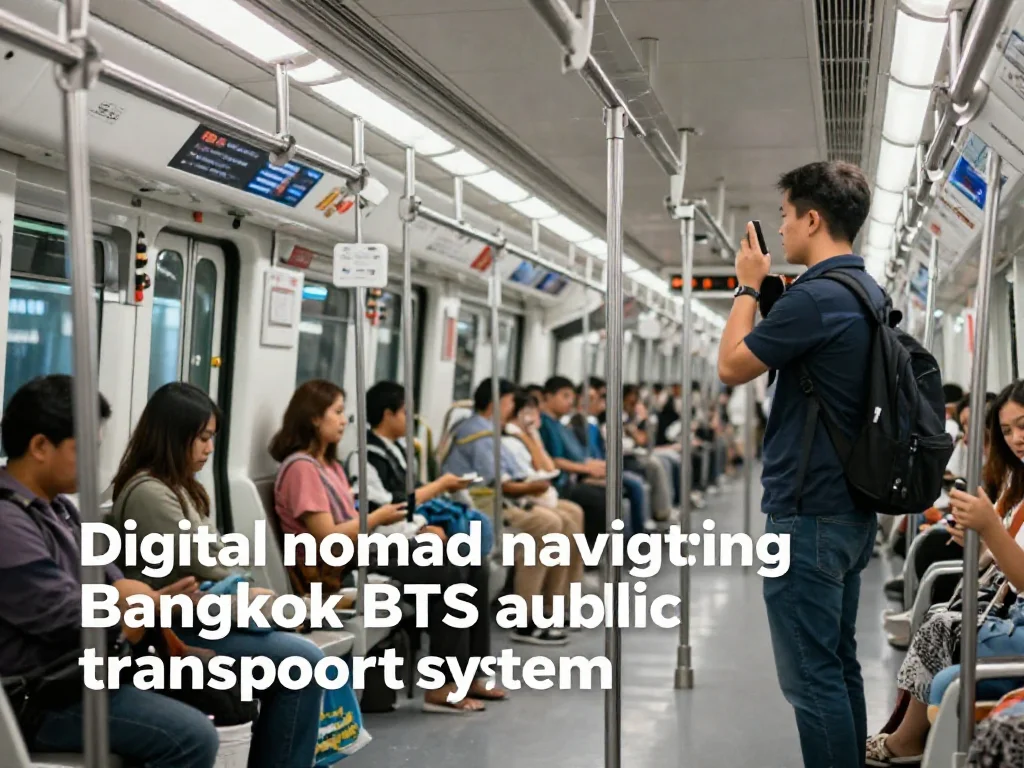
Public Transport in Thailand for Digital Nomads: A Practical BTS and MRT Guide
Navigating a bustling metropolis like Bangkok can be overwhelming, but mastering public transport in Thailand for digital nomads is the ultimate life hack for productivity and lifestyle freedom. Whether you are heading to a coworking space in Sukhumvit or grabbing lunch in Silom, the BTS Skytrain and MRT Subway networks are your best friends. This guide breaks down exactly how to use these systems like a seasoned resident.
public transport in Thailand for digital nomads: Understanding the Backbone: BTS vs. MRT
For anyone living or working remotely in Thailand, distinguishing between the BTS and the MRT is essential. They are distinct systems operated by different companies, which historically meant you needed separate tickets. While integration has improved, knowing the difference saves you time and frustration.
The BTS (Bangkok Mass Transit System), or Skytrain, runs on elevated tracks. It is generally the fastest way to traverse the city’s heavy traffic zones during rush hour, connecting major commercial and residential districts. The MRT (Metropolitan Rapid Transit), or Subway, runs largely underground. It serves as a vital artery for the city, connecting the outskirts to the central business districts and often acting as a bridge to other transport modes.
| Feature | BTS (Skytrain) | MRT (Subway) |
|---|---|---|
| Type | Elevated Train | Underground/Subway |
| Best For | Sukhumvit, Silom, Siam | Business Districts, Cultural Sites |
| Payment | Rabbit Card / Single Ticket | EMV Contactless / MRT Card |
| Connectivity | Excellent (North/South/East) | Excellent (City Center/Outer) |
Payment Hacks for Digital Nomads
Gone are the days of standing in long queues at ticket machines. As a digital nomad, efficiency is key. For the BTS, the Rabbit Card remains the standard for stored-value trips. You can top it up at any station or even at convenience stores like 7-Eleven. For the MRT, the system has modernized significantly. You can now use most international credit or debit cards with contactless (EMV) capability directly at the gates.
Rush hour in Bangkok is legendary. From 7:00 AM to 9:00 AM and 5:00 PM to 7:00 PM, stations will be packed. If you are a digital nomad with a flexible schedule, try to time your travel outside these windows. If you must travel during peak hours, follow these rules to maintain your sanity:
- Stand aside: When the doors open, wait for passengers to exit completely before attempting to board.
- Backpack etiquette: If your bag is heavy, take it off and place it between your feet to save space for others.
- Stay connected: Use apps like Google Maps or Transit TH to get real-time alerts on delays or line closures.
Connectivity and Coworking Access
Many of the most popular coworking spaces and cafes favored by digital nomads are situated within a 10-minute walk of a BTS or MRT station. When choosing your accommodation, prioritize proximity to these lines. Living near a station like Asok (Interchange between BTS and MRT) or Phrom Phong gives you unmatched mobility. This allows you to explore different neighborhoods, meetups, and networking events without ever touching a taxi or motorbike.
Checklist: Your Transit Survival Kit
Prepare yourself for seamless travel in Bangkok with this simple checklist:
- [ ] Get a Rabbit Card for BTS travel.
- [ ] Ensure your primary bank card supports contactless payments for the MRT.
- [ ] Download a reliable transit app (Google Maps works excellently).
- [ ] Keep a small “emergency” stash of 100-200 THB in cash.
- [ ] Carry a portable power bank; your phone is your ticket and map.
Conclusion
Understanding public transport in Thailand for digital nomads is not just about moving from point A to point B—it is about reclaiming your time. By leveraging the BTS and MRT, you avoid the notorious traffic, save money, and gain a deeper appreciation for the city’s rhythm. Once you navigate these systems, you will find that Bangkok is one of the most accessible and exciting hubs for remote workers in Southeast Asia.
Frequently Asked Questions (FAQ)
Can I use the same card for both BTS and MRT?
Unfortunately, no. The BTS (Rabbit Card) and the MRT (Contactless/MRT Card) operate on different systems. You will need to maintain separate payment methods for each.
Is public transport in Bangkok expensive?
Compared to Western cities, public transport in Bangkok is very affordable. Most trips cost between 15 and 60 THB depending on the distance traveled.
Are there late-night services available?
Both BTS and MRT services typically stop running around midnight. If you are out later, you will need to rely on taxis or ride-hailing apps like Grab or Bolt.